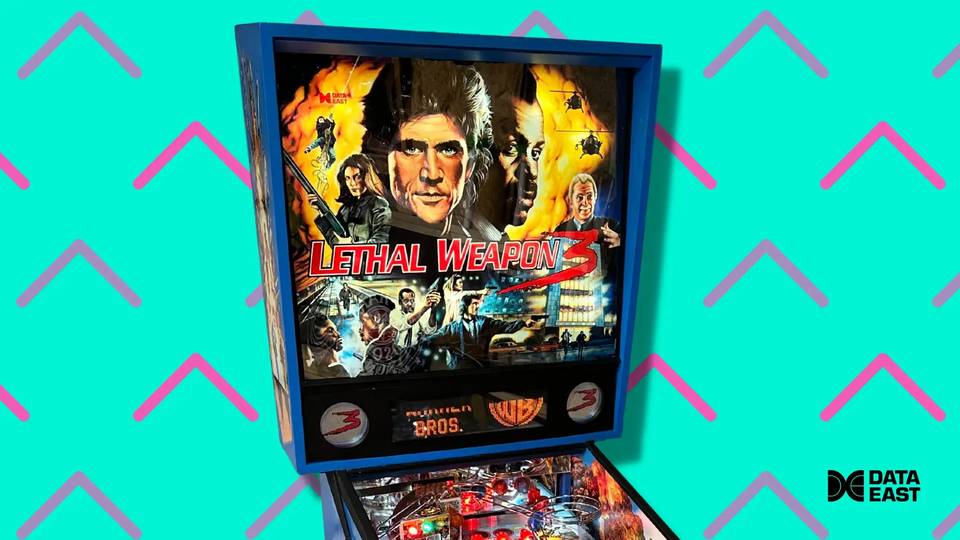
Episode 36 - Die on this Hill: Lethal Weapon 3

Wedgehead Pinball Podcast
43 min
Summary
Data East USA Inc. Lethal Weapon 3: a fun but divisive 1992 pin lost to time and poor maintenance.
In this episode of the Wedgehead Pinball Podcast "Die on this Hill" series, host Alan and co-host Alex discuss the divisive 1992 Data East game Lethal Weapon 3 with guest Ashley, a pinball restoration artist who passionately defends the game against widespread negative reviews. The episode explores why a game that sold 10,350 units: the second-best-selling Data East title ever: is often criticized for poor art, shallow rules, repetitive call-outs, and mechanical reliability issues, while Ashley and the hosts argue for its fun factor, satisfying shot layout, and charming 90s aesthetic. The discussion touches on broader themes: the difference between deep rule sets and accessible fun, the impact of machine condition on perception, and generational shifts in pinball player expectations.
Highlights
- Lethal Weapon 3 sold 10,350 units, making it the second best-selling game Data East ever made, outsold only by Star Wars by 50 units.
- Lethal Weapon 3 was designed by Ed Cebula and Joe Kaminkow with software by Kristina Donofrio, and artwork by Markus Rothkranz.
- Star Wars (the next Data East game) was John Borg first game as a designer, and he is still working at Stern.
- The Addams Family was released three months before Lethal Weapon 3 in 1992, representing the early 90s pinball renaissance.
- Kristina Donofrio worked on some games in the 80s for Williams before Data East, making her a notable female programmer in an era when women in pinball were rare.
- Keith Elwin took his wire form concept from Jurassic Park inspired by Lethal Weapon 3's design.
- 1992 was the best-selling pinball year of all time.
- Data East games experience mechanical reliability issues over time, with playfield components degrading more than competitor machines.
- Modern pinball players tend to prefer games with deeper rule sets and are biased toward newer Stern machines because they are consistently well-maintained on location.
- Data East had access to major licenses that Bally/Williams did not, allowing Joe Kaminkow to secure franchises like Lethal Weapon.



Comments